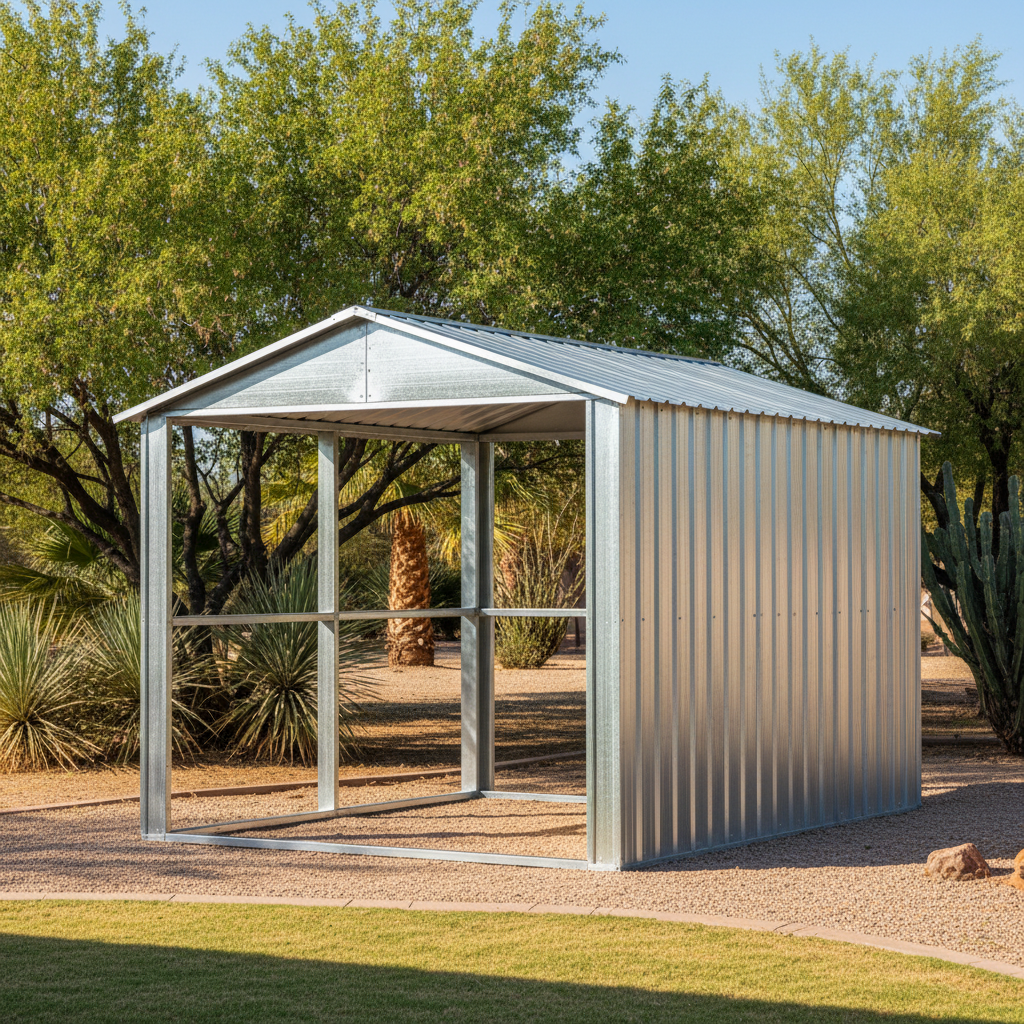
Alright, let's talk about your metal shed. You've got it for storage, a workshop, maybe even a little escape from the house. Whatever its purpose, you want it to last, especially with our brutal Mesa sun beating down on everything. I've been building these things for years, and I can tell you, a little bit of regular attention goes a long way to extending its life.
Keeping Your Shed Strong in the Arizona Heat
Here's the deal: metal buildings are tough, but they aren't invincible, especially out here. The biggest enemies? UV rays, dust, and those crazy monsoon storms. To really get the most out of your investment, you gotta think about prevention.
- Good Foundation Matters: This isn't maintenance, exactly, but it's the first step to longevity. If your shed wasn't built on a solid, level concrete pad or an engineered gravel base that drains well, you're already fighting an uphill battle. Water pooling around the base is a killer, plain and simple.
- Proper Ventilation is Key: Our summers hit 115 degrees, sometimes even more. That heat builds up inside a sealed metal shed like you wouldn't believe. Good ventilation — vents at the top and bottom — helps dissipate that heat, reducing stress on the materials and protecting whatever you're storing inside. If you don't have enough, consider adding some more.
- Shade, If Possible: I know it's not always practical, but if you can position your shed where it gets some afternoon shade from a tree or another structure, you'll drastically reduce the thermal expansion and contraction cycles that wear down metal over time.
What Regular Maintenance Looks Like
This isn't rocket science, folks. Most of it you can do yourself with a ladder and a hose.
- Clean the Exterior Annually (or Bi-Annually): Dust, dirt, and even bird droppings can accumulate and, over time, degrade the paint finish. A simple wash with a mild detergent and a soft brush, followed by a good rinse, does wonders. Pay attention to the lower panels where dust tends to pile up.
- Check Fasteners and Seams: Every six months or so, walk around your shed. Look at all the screws, bolts, and rivets. Are any loose? Are any missing? Tighten them up. Check the caulk or sealant around windows, doors, and roof penetrations. Our dry air can make caulk brittle, so if you see cracks, scrape out the old stuff and apply a fresh bead of high-quality, outdoor-rated sealant. This is crucial for keeping water and pests out.
- Clear Gutters and Downspouts: If your shed has gutters, make sure they're clear of leaves and debris, especially before monsoon season. Clogged gutters mean water overflowing and potentially pooling around your foundation, which we just talked about is a big no-no.
- Inspect the Roof: Get up there safely, or use binoculars from the ground. Look for any signs of damage – dents, punctures, or loose panels. Check the flashing around any vents or pipes.
- Door and Window Hardware: Lubricate hinges, latches, and tracks on doors and windows. Our fine desert dust can really gum things up. A little silicone spray or graphite goes a long way to keep things operating smoothly.
Warning Signs You Shouldn't Ignore
Catching problems early saves you money and headaches down the road. Keep an eye out for these:
- Rust: Any sign of rust, especially on panels, fasteners, or the frame, needs immediate attention. Surface rust can often be treated by cleaning, sanding, priming, and painting. If it's deep rust, it might mean a panel needs replacing.
- Leaks: After a rain, check inside your shed for any drips, wet spots, or water stains. Trace them back to their source. It could be a loose fastener, compromised sealant, or a damaged panel.
- Loose or Rattling Panels: If you hear panels rattling in the wind or see them visibly moving, it means fasteners are failing. This is a structural issue and needs to be addressed quickly before a panel flies off in a storm.
- Pest Infestation: Look for signs of rodents, insects, or other critters trying to make a home in your shed. Seal up any entry points you find.
- Sagging or Bowing: This is a serious structural issue. If you see any part of the frame or roof sagging, or walls bowing, you need professional help immediately.
When to Call a Professional
While a lot of maintenance is DIY, there are times you just need to pick up the phone. If you're seeing significant rust, structural damage like sagging, persistent leaks you can't track down, or if you're just not comfortable getting on the roof, that's when you call someone like us at Mesa Metal Buildings. We've got the tools, the experience, and the safety gear to handle those bigger jobs. Don't let a small problem turn into a huge repair bill because you waited too long or tried to tackle something beyond your skill set. We're here to help keep your investment solid.