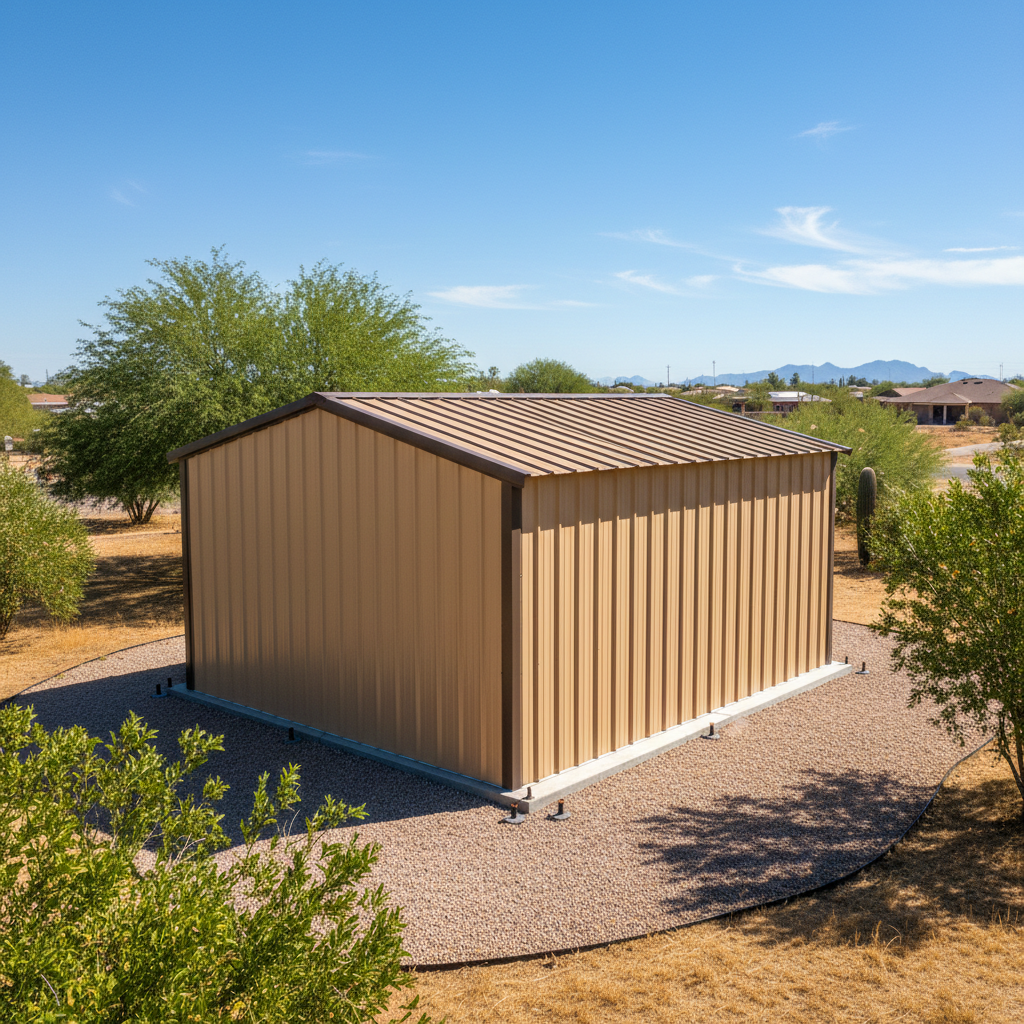
Alright, let's talk brass tacks about metal building costs here in Mesa. I get calls every day from folks wanting to know, "What's this going to run me?" And while I can't give you an exact number without seeing your project, I can definitely pull back the curtain on what affects the price tag and give you some realistic figures. You don't want to get sticker shock, and you certainly don't want to overpay.
What Makes the Price Go Up or Down?
There's no single price for a metal building, just like there's no single price for a car. A lot of factors play into it. Here's what I'm looking at when I put together a quote:
- Size and Dimensions: This is a no-brainer, right? A bigger building means more materials, more labor, and more foundation work. For example, a 30x40 foot garage will cost less than a 60x100 foot workshop. Height matters too; a 16-foot eave height costs more than a 12-foot one.
- Building Type and Design: Are we talking a simple open-air carport? Maybe a fully enclosed storage building? Or a complex commercial structure with offices? Custom designs, multiple bay doors, specific roof pitches, or architectural finishes will definitely add to the cost.
- Foundation Requirements: This is a big one, especially in Mesa. Our caliche soil can be a real pain. Sometimes you need more than just a standard concrete slab. If we hit hard caliche or need to do significant grading, that's extra work and material for the foundation crew. A simple 4-inch slab with footings is cheaper than a 6-inch slab designed for heavy equipment or a raised foundation.
- Material Quality and Gauge: Not all steel is created equal, you know. Thicker gauge steel for the framing and sheeting will last longer and stand up better to our Arizona sun and occasional dust storms, but it costs more upfront. Standard 26-gauge sheeting is common, but some folks opt for 24-gauge for extra durability.
- Insulation: You're in Mesa, you need insulation. Period. Whether it's basic R-13 or a higher R-value spray foam, it's an added expense, but it's one that pays for itself in energy savings. Don't skimp here.
- Doors and Windows: How many roll-up doors, walk-through doors, and windows do you want? What size are they? Insulated doors are more expensive but save energy. Automatic openers add convenience and cost.
- Site Preparation: Is your site level and clear? Or do we need to do extensive grading, clear brush, or remove old structures? This can be a significant cost if the site isn't ready.
- Permits and Engineering: Every building needs permits, and most larger metal buildings require engineered plans, especially here in Maricopa County. These aren't cheap, but they're non-negotiable for safety and compliance.
- Accessories and Customizations: Gutters, downspouts, interior partitioning, mezzanines, specialized ventilation, skylights, lean-tos, wainscoting – these all add to the final price.
Typical Cost Ranges You Might See
Okay, let's get down to some real numbers. Keep in mind these are broad ranges for a typical, fully installed metal building (not just a kit) with a concrete slab foundation, basic insulation, a couple of doors, and standard site prep. This isn't for highly customized architectural buildings.
- Small Utility/Storage (20x20 to 24x30 feet): You're generally looking at $25,000 to $45,000. This could be a nice two-car garage or a decent-sized workshop.
- Medium-Sized Workshop/Garage (30x40 to 40x60 feet): For something in this range, expect to pay between $45,000 and $90,000. This is where most homeowners and small businesses land for serious space.
- Large Commercial/Agricultural (50x80 to 60x100 feet and up): These projects can easily run from $90,000 to $200,000+, depending heavily on height, bay doors, and interior build-out.
These figures include the building kit, delivery, concrete foundation, insulation, installation labor, and basic permits/engineering. Remember, these are rough estimates. Your specific project could be higher or lower.
What Should Be in Your Quote?
When you get a quote from Mesa Metal Buildings or any other reputable contractor, it should be detailed. Don't accept a one-line price. You want to see:
- Detailed Building Specifications: Size, eave height, roof pitch, steel gauge for frame and sheeting, color choices.
- Foundation Plan: The type of slab (e.g., 4" concrete slab with 12"x12" footings), rebar schedule, vapor barrier.
- Insulation Details: R-value, type (e.g., R-13 vinyl-backed fiberglass).
- Doors and Windows: Sizes, types (e.g., 10x10 roll-up door, 3070 walk-through door), whether they're insulated.
- Site Work: What's included for grading, excavation, and debris removal.
- Permits and Engineering: Confirmation that these are handled and included.
- Labor Costs: Installation of the building and foundation.
- Any Additional Accessories: Gutters, vents, etc.
- Warranty Information: For both materials and workmanship.
If a quote is vague, that's a red flag. You need to know exactly what you're paying for.
How to Avoid Overpaying
Nobody wants to get ripped off. Here's my advice:
- Get Multiple Quotes: This is standard practice. Get at least three detailed quotes from different contractors. It helps you compare apples to apples and understand the market rate.
- Be Specific About Your Needs: The more details you provide upfront, the more accurate the quote will be. Don't change your mind halfway through the project, as that leads to costly change orders.
- Understand the Scope: Make sure each quote covers the exact same scope of work. One contractor might include site prep, another might not. One might include higher-gauge steel, another standard.
- Check References and Reviews: A low price isn't a good deal if the work is shoddy. Look for contractors with a solid reputation for quality and reliability.
- Don't Be Afraid to Ask Questions: If you don't understand something in the quote, ask. A good contractor will take the time to explain it clearly.
- Consider the Long-Term Value: Sometimes paying a little more upfront for better materials or insulation saves you a lot more in maintenance and energy costs down the road. That cheap building might cost you more in the long run.
Building a metal structure is a big investment, but it's one that can add huge value and utility to your property. Do your homework, ask the right questions, and you'll end up with a building that serves you well for decades.